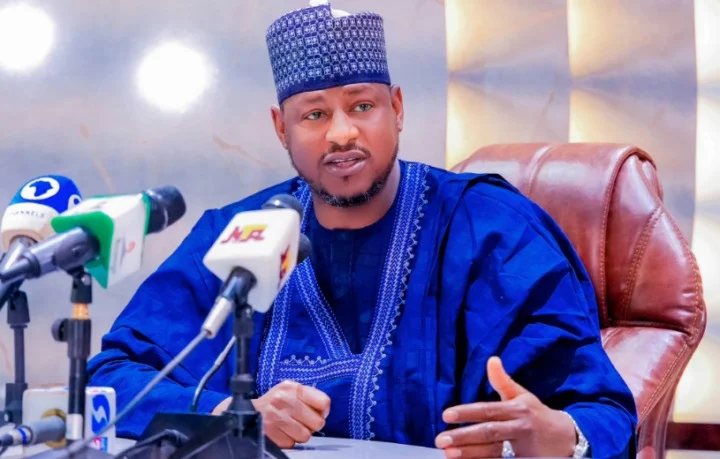
Katsina State Governor, Dikko Radda, on Thursday, vowed to end water shortages across the state through sustained investment in water infrastructure and expanded access to potable water.
Radda made the pledge while commissioning the Tsagero Small Town Water Supply Scheme in Rimi Local Government Area of the State, describing access to clean water as a basic human necessity and a key driver of public health, economic growth and sustainable development.
He disclosed that 32 of the 66 Small Town Water Supply Schemes awarded by his administration have been completed and are either operational or ready for commissioning, while more projects are underway.
“Our administration is determined to address water supply challenges and improve the living conditions of our people. We are not stopping here. More STOWASSA schemes will be constructed and expanded across the state to ensure that every community has access to safe, reliable and sustainable water services,” he said.
According to him, the Tsagero water scheme will provide potable water to households, schools, healthcare facilities and businesses, while reducing the burden of water collection, especially for women and children.
“The project we are commissioning today represents a significant step forward in our efforts to ensure that communities such as Tsagero have access to safe, sustainable and adequate water supply services,” Radda said.
He noted that the state government is implementing several other interventions to strengthen water supply, including the multi-billion Naira Zobe Water Supply Project, rehabilitation of major water infrastructure, automation of Water Board operations and projects supported by the World Bank under the SURWASH and SPIN programmes.
The governor urged residents of Tsagero to take ownership of the facility by protecting and using it responsibly to ensure its sustainability.
“To the people of Tsagero, this project belongs to you. Protect it. Support its management. Use it responsibly,” he added.
Katsina has for years grappled with inadequate access to potable water, particularly in rural communities where residents often rely on hand-dug wells, streams and other unsafe water sources.
Rapid population growth, ageing infrastructure and climate-related challenges have further strained water supply systems in many parts of the state.