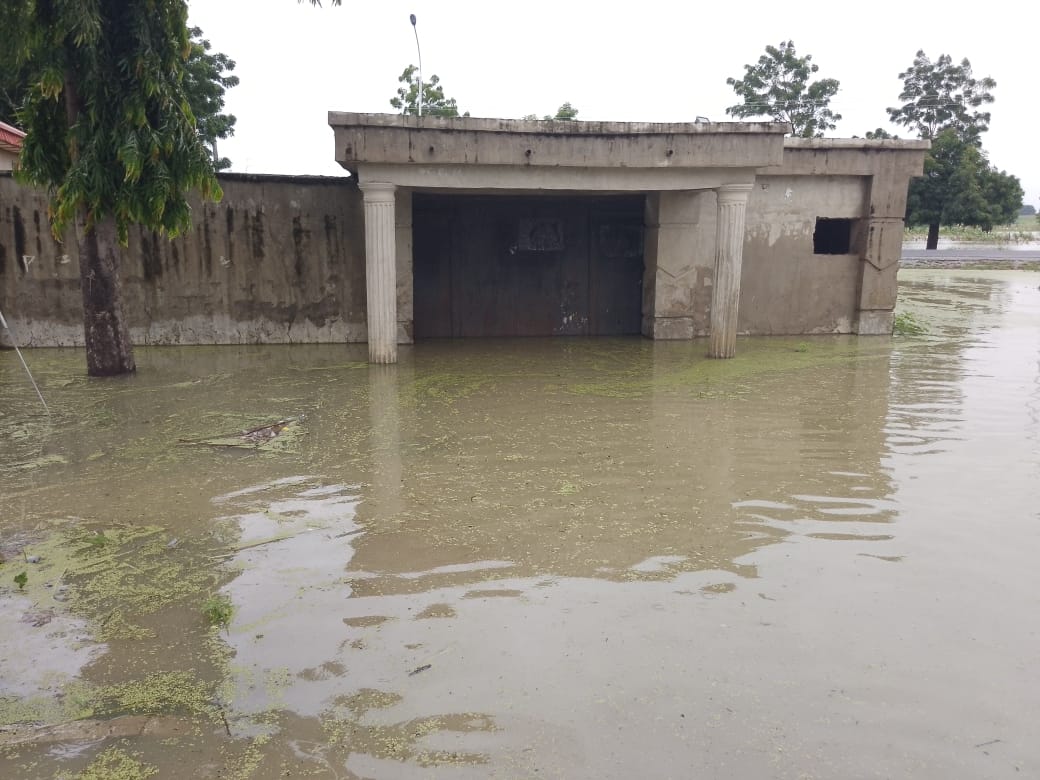
Over 200 buildings have been damaged following a heavy downpour and powerful windstorm that hit Dutse, the Jigawa State capital, on Saturday. The rainfall, which began at about 8:00 a.m. and lasted for more than an hour, flooded several parts of the city, destroying homes, schools, markets, places of worship……
Over 200 buildings have been damaged following a heavy downpour and powerful windstorm that hit Dutse, the Jigawa State capital, on Saturday.
The rainfall, which began at about 8:00 a.m. and lasted for more than an hour, flooded several parts of the city, destroying homes, schools, markets, places of worship and other public and private buildings.
The storm also brought down electricity poles and power lines, leaving many communities without electricity for more than 16 hours.
The prolonged blackout disrupted businesses, affected residents and slowed economic activities across the state capital.
Several roads were submerged by floodwater, making movement difficult for motorists and pedestrians, while property worth millions of naira is feared to have been lost.
The Jigawa State Emergency Management Agency says assessment teams have been deployed to determine the extent of the damage and identify affected households.
The agency says efforts are underway to provide emergency assistance to victims.
Officials of the Kano Electricity Distribution Company, who spoke on condition of anonymity, said engineers are working to repair damaged electricity infrastructure and restore power supply as quickly as possible.
Read Also:Jigawa state generates over ₦12bn in tax revenue in 4 months
However, many parts of Dutse remained without electricity as of the time of filing this report.
The incident comes amid growing concerns over this year’s rainy season.
The Nigerian Meteorological Agency has identified 14 local government areas in Jigawa as being at medium risk of flooding, while more than 100 communities are considered highly vulnerable.
Similarly, the National Emergency Management Agency has urged residents in flood-prone communities to take precautionary measures and called on relevant authorities to strengthen emergency preparedness to reduce the impact of possible flooding during the peak of the rainy season.
The latest incident highlights the increasing need for improved drainage infrastructure, stronger disaster preparedness and swift emergency response to protect lives and property as the rainy season intensifies.